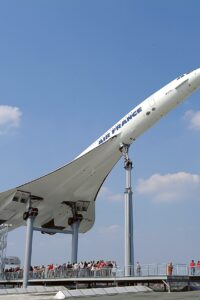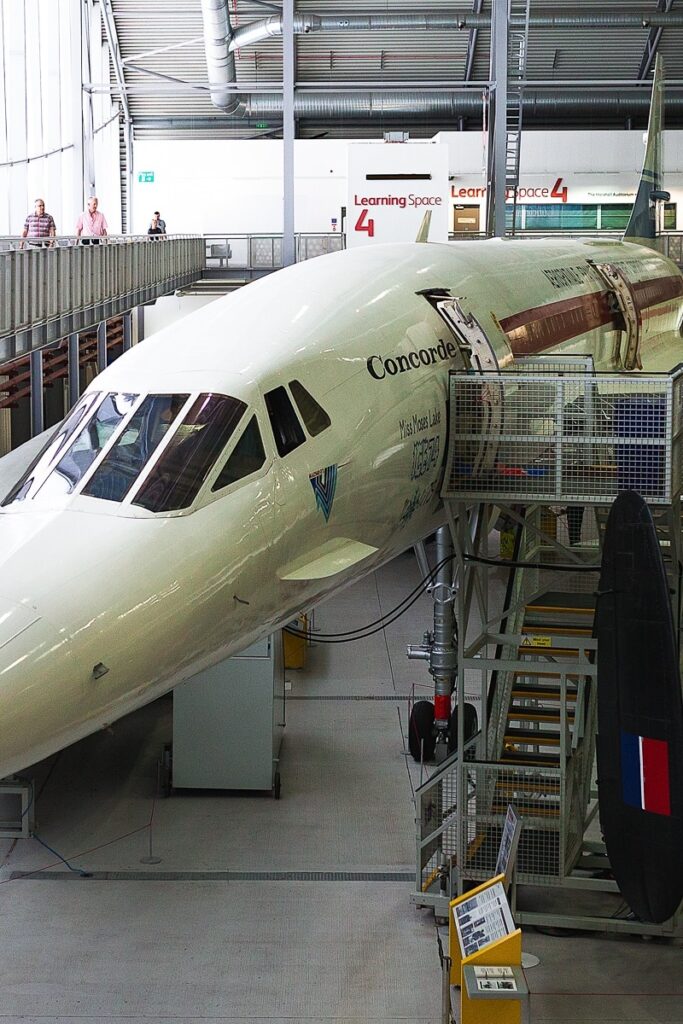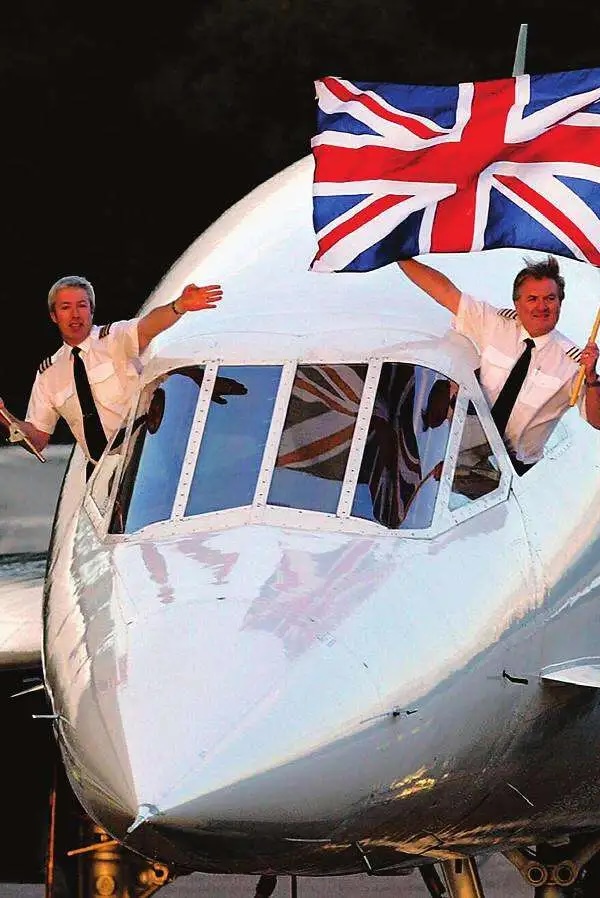





Speedbird Concorde slices through the highest clouds of the sky. Inside, champagne glasses tremble as a soft chime announces it: «Ladies and gentlemen, we have just passed Mach 2». The cabin falls quiet for a heartbeat, not from fear, but from awe. Outside, the curvature of the Earth is visible, a faint blue halo against black. The sun, which had set an hour ago in London, appears to rise again in the west.
That’s Concorde at its peak: a machine bending time, sprinting faster than the planet’s rotation, and turning the ocean from an obstacle into an intermission. At the same time, it’s also a paradox: one of aviation’s greatest technological triumphs and one of its clearest commercial failures.
By the end of its life, Concorde will have carried royalty, rock stars, CEOs, and dreamers. It will also have burned money, fuel, and political goodwill in almost equal measure. Its story is a supersonic arc too: an ambitious bright dreaming take off, followed by a dazzling taxi powered by ambition, then by a long, controlled descent up to the landing into the Realm of Legend.

Context
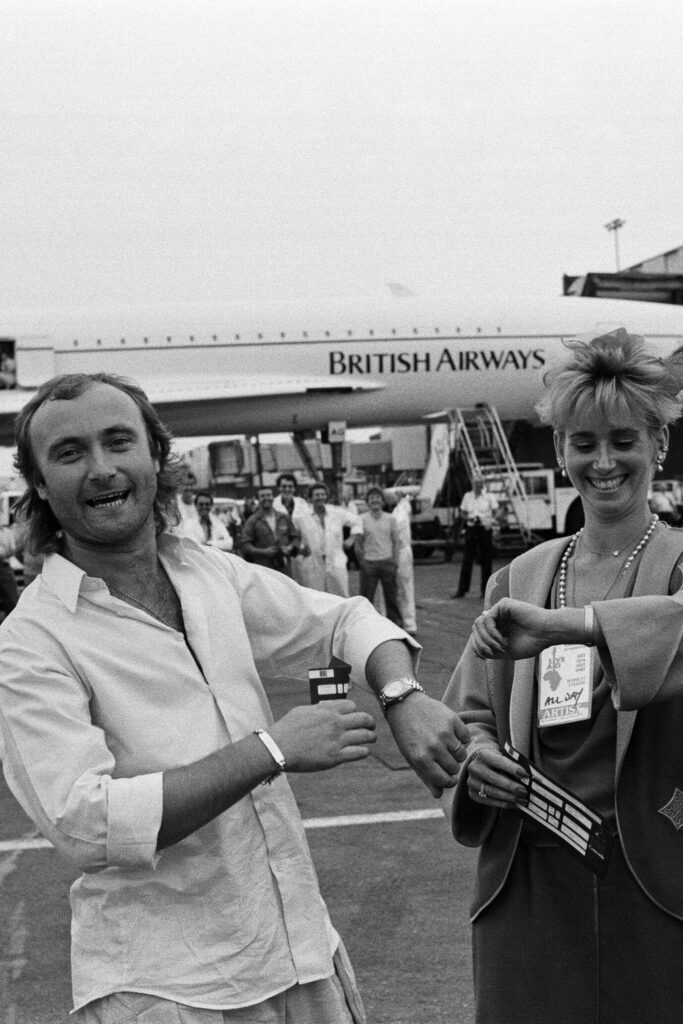
The idea of commercial supersonic flight was born in the charged atmosphere of the Cold War and the jet age: in the 1950s and 60s, speed symbolized progress. Fighter jets were breaking the sound barrier, the space race was underway, and airliners like the Boeing 707 had already shrunk the world. The next step seemed obvious: make civilian aircraft fly faster than sound.
Europe, feeling overshadowed by American aerospace dominance, saw a chance to leap ahead, France and the United Kingdom joined forces in a rare act of deep industrial cooperation. From this political and technological marriage came Concorde, from the French and English word meaning harmony or agreement. The name itself carried a hope that this airplane could be more than a machine: it could be a statement that Europe could rival, or even surpass, the United States.
At the same time, the U.S. was pursuing its own Supersonic Transport (SST) program, and the Soviet Union would produce the Tu-144. A future with hundreds of supersonic airliners crisscrossing the globe appeared inevitable. Concorde was not meant to be an exotic outlier, it was supposed to be the prototype of a new normal, where crossing the Atlantic in under three hours would be as common as a red-eye flight.
The economic logic, on paper, was compelling. Time is money, especially for business travelers. If Concorde could shave hours off long-haul routes, passengers would pay a premium. Airlines would, in theory, offset high development and operating costs with high ticket prices and high utilization. The stage seemed set for a revolution in air travel.
Challenge
Reality, however, proved more turbulent than any flight plan.
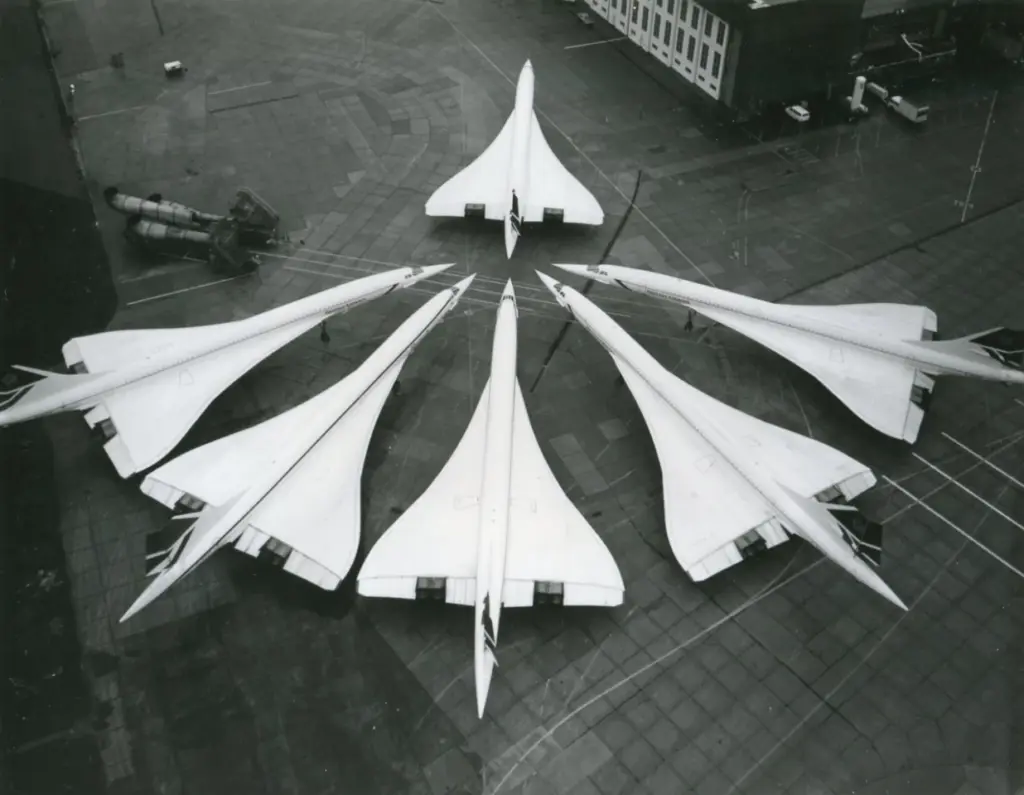
First, there was the physics. Flying at Mach 2 at high altitude demanded a slender, delta-wing design and powerful afterburning engines. That meant Concorde would be noisy, thirsty for fuel, and limited in range compared to subsonic jets. Its thin fuselage allowed only around 100 passengers, far fewer than the wide-bodies that were beginning to dominate long-haul travel.
Then came the environmental and political headwinds, sonic booms over land sparked public outcry. U.S. cities like New York and Washington debated, delayed, and restricted Concorde operations. The aircraft was effectively confined to transoceanic routes, mostly across the North Atlantic, shrinking its commercial Playground.
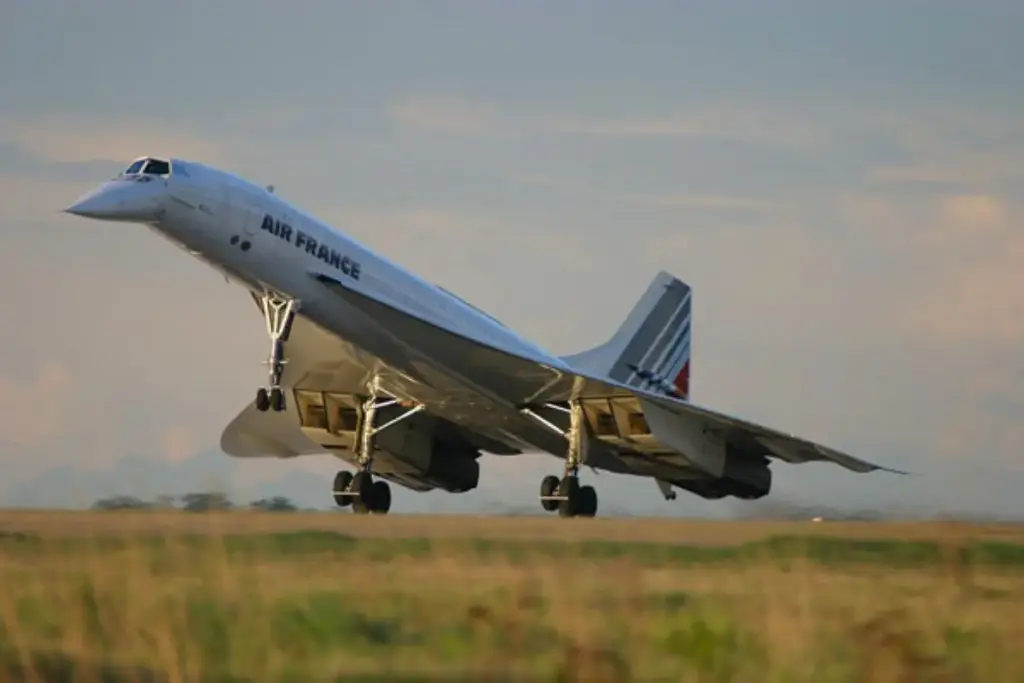
Economics dealt the harshest blows. The 1973 oil crisis sent fuel prices soaring, undermining the business model of a fuel-hungry aircraft. Airlines that had once placed letters of intent for Concorde quietly backed away. Only Air France and British Airways, backed by their governments and national pride, ultimately took it into regular service.
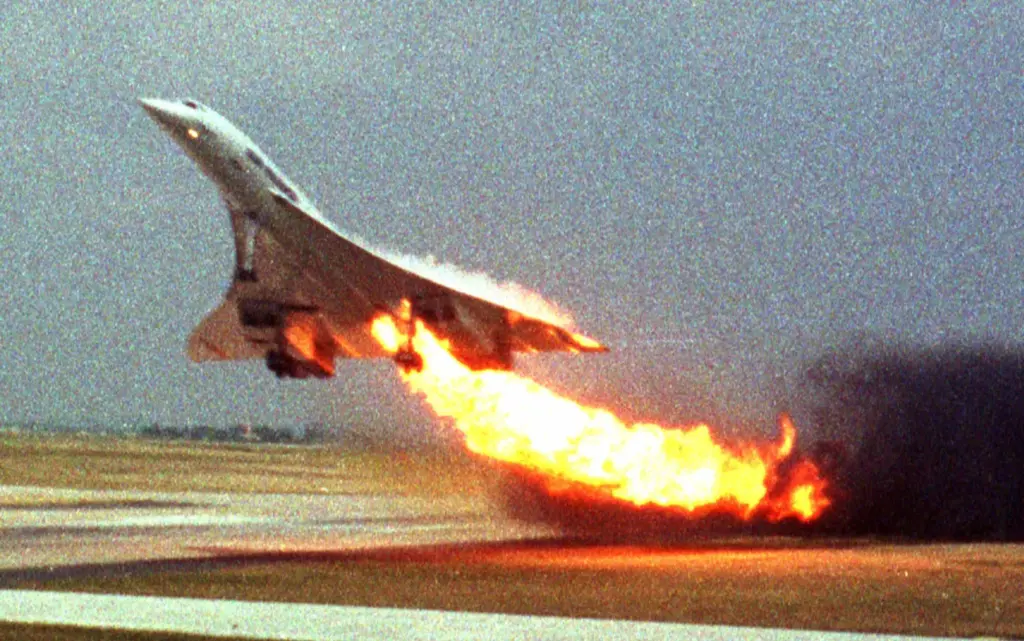
Finally, there was tragedy. In July 2000, an Air France Concorde crashed shortly after takeoff from Paris, killing all on board and people on the ground. Although the technical causes were specific and addressed, the accident shattered the aura of invincibility surrounding the aircraft. In a market already skeptical of its economics, safety fears and post-9/11 2001 downturn sealed its fate.
What began as a symbol of limitless progress turned into a case study in constraints—technological, environmental, political, and financial.
Analysis
Concorde’s story is not simply one of too expensive or too early. It is the intersection of brilliant engineering with imperfect assumptions about markets, technology, and society.
Technical Triumphs
Supersonic commercial flight was technically possible and operable on a daily schedule.
- Aerodynamic innovation: Concorde’s slender delta wing and droop nose were engineering masterstrokes, allowing high-speed cruise and manageable low-speed handling.
- Engine performance: The Olympus 593 turbojets, with afterburners, pushed a commercial airliner to Mach 2, unprecedented for scheduled passenger service.
- Operational reliability: For most of its career, Concorde enjoyed high dispatch reliability and an excellent safety record, with one catastrophic exception.
Structural Weaknesses
Yet structural flaws in its business and ecosystem design undermined that technical success:
- Capacity vs. cost mismatch: Around 100 seats trying to amortize the enormous fixed and operating costs made profitability highly sensitive to load factors and pricing.
- Fuel consumption: Supersonic drag and afterburning engines meant fuel burn per passenger was much higher than subsonic competitors.
- Network limitations: Sonic boom restrictions limited routes largely to over-ocean segments, constraining growth and flexibility.
Market Misreading
Planners overestimated how much the broader market valued speed beyond a narrow premium segment.
- Many business travelers were price- and schedule-sensitive: saving three hours did not justify paying several times the fare of a subsonic flight for most.
- The rise of widebody jets (747, DC-10, L-1011) shifted the value proposition toward comfort, capacity, and lower fares, not just speed.
- Deregulation and increasing competition pushed airlines toward cost efficiency, further marginalizing ultra-premium niches.
External Shocks
Concorde’s viability was also buffeted by factors beyond its designers’ control:
- Oil crises raised operating costs dramatically.
- Environmental awareness made noisy, fuel-thirsty aircraft politically and socially contentious.
- Geopolitics and local politics led to route and airport restrictions.
- Safety events and global downturns (the 2000 crash, 9/11) reduced demand for high-end air travel.
Legacy Lessons
From a strategic lens, Concorde highlights:
- The danger of designing for prestige instead of robust economics.
- The risk of assuming technology alone will shift market behavior.
- The importance of aligning breakthrough products with regulatory, environmental, and social expectations.
Concorde was a technological success and a systemic failure—a high-speed aircraft inserted into an ecosystem that could not fully support it.
Next generation high-speed air travel
What if we imagine the future of Concorde 2.0? What should be done differently? How to honor its ambition while correcting its blind spots?
Reframe the Value Proposition
Instead of chasing speed for its own sake, focus on time-critical use cases and end-to-end journeys:
- Target routes where time saved is extremely valuable (e.g., certain transoceanic business corridors).
- Integrate with fast transfers, seamless customs, and digital services so that door-to-door time—not just block time—is reduced.
- Explore mixed models: cargo + passengers, or fractional ownership and membership-based services.
Design for Sustainability and Regulation
Any future supersonic concept must treat environmental and regulatory constraints as primary design inputs, not afterthoughts:
- Use low- or zero-carbon fuels (SAF, hydrogen where feasible) to reduce climate impact.
- Minimize or eliminate sonic boom effects with advanced aerodynamics and flight profiles, easing overland restrictions.
- Design for low noise on takeoff and landing to increase airport acceptance.
Build an Economic Ecosystem, Not Just an Aircraft
Key strategies could include:
- Scalable production: Avoid “boutique” production numbers that lock in high unit costs. Aim for modular designs that can share components with other aircraft where possible.
- Flexible cabin and revenue models: Configurable interiors (all-premium, mixed premium/business, high-yield cargo). Dynamic pricing and partnerships with corporations, governments, and charter operators.
- Route strategy: Start with a small set of high-yield, high-demand corridors. Gradually expand as regulatory approvals, public acceptance, and infrastructure improve.
Leverage Modern Technology
Modern tools can address some of the limitations that hobbled Concorde:
- Advanced materials (composites, high-temperature alloys) for lighter, more efficient structures.
- High-bypass or variable-cycle engines optimized for both subsonic and supersonic regimes, reducing fuel burn and noise.
- Digital twins and AI-driven optimization for design, maintenance, and operations, lowering lifecycle costs.
Governance and Collaboration
Lessons from Concorde’s politically driven origins suggest a different approach:
- Create multi-stakeholder consortia involving manufacturers, airlines, regulators, climate scientists, and communities.
- Establish transparent metrics for Environmental impact, Noise, Safety, Economic viability
- Treat government support as seed capital with clear milestones rather than a blank check tied to national prestige.
Conclusions
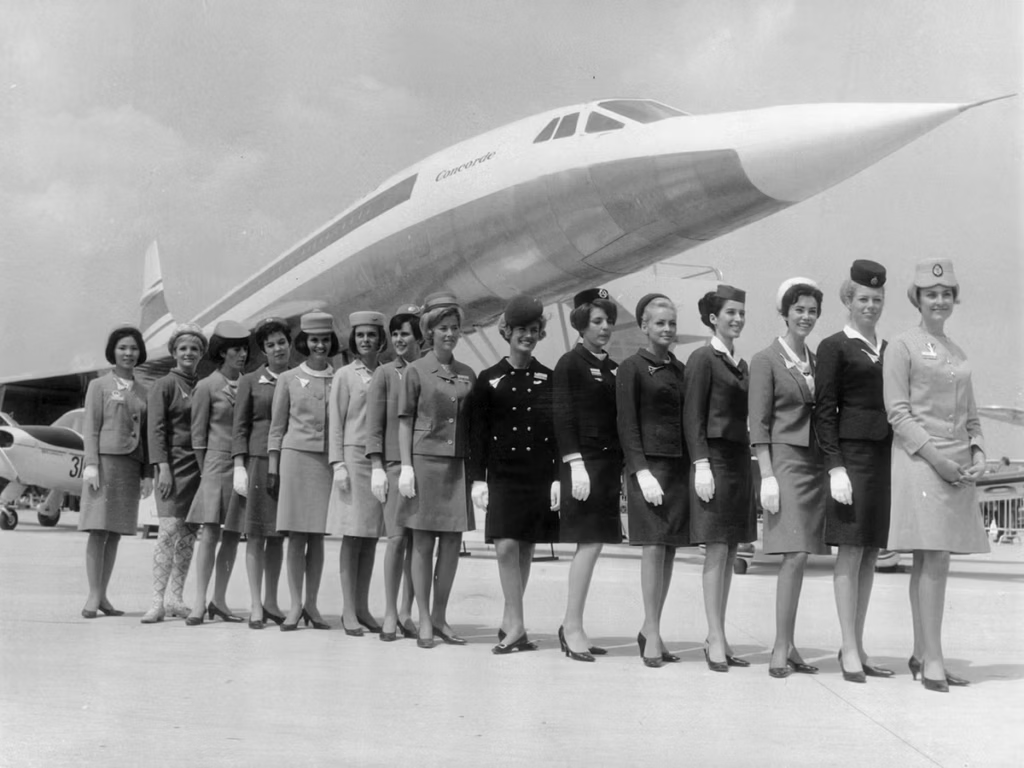
Concorde was an airplane ahead of its time in speed but not in systems thinking. It proved that humans could build a reliable, beautiful machine that routinely tore through the sky at twice the speed of sound, and that this alone was not enough.
Its success lies in what it made possible and imaginable: supersonic travel as a lived experience, not just an experimental stunt. Its failure lies in the gap between that vision and an unforgiving reality of fuel prices, politics, noise, regulation, and markets that were not quite ready to pay for the future it offered.
Today, as new companies and agencies sketch their own supersonic and hypersonic concepts, Concorde’s ghost lingers in every business plan and wind-tunnel test. It whispers a simple reminder: greatness in technology must be matched by wisdom in design, economics, and ethics.
Only then will the next Silver Needle that pierces the sky stay aloft not just as a legend, but as a sustainable part of everyday life.