





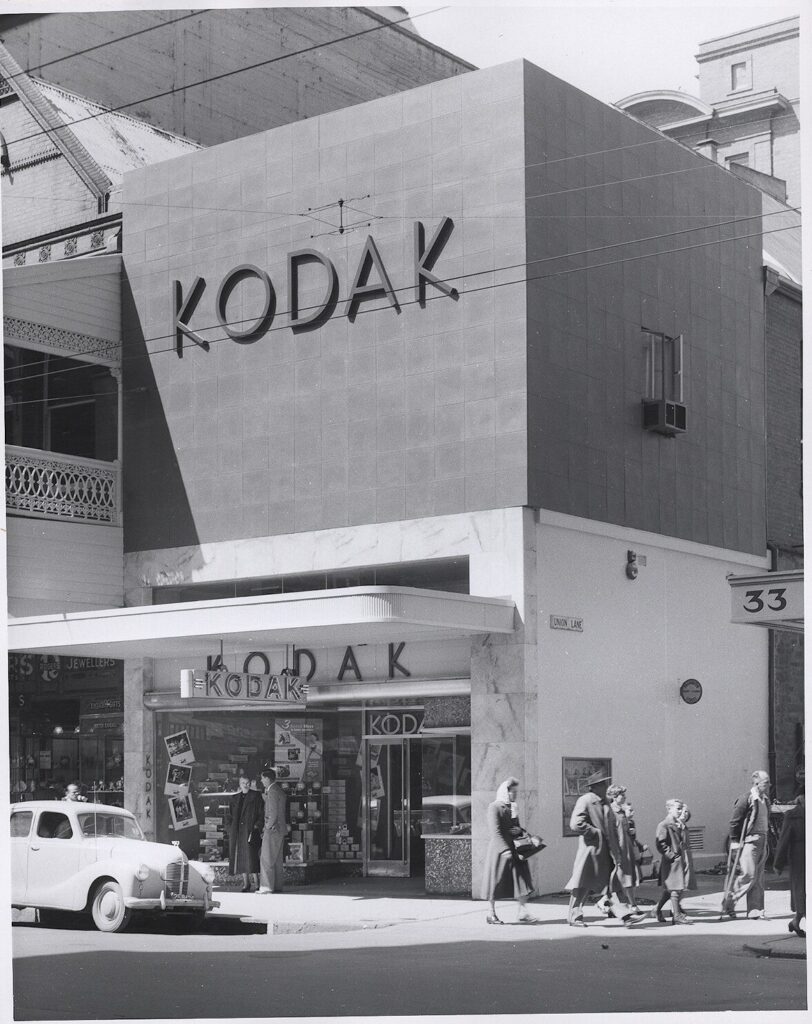
In the twilight of the 20th century, Eastman Kodak stood like a golden citadel over the world of images. Its yellow boxes lined store shelves on every continent; its chemistry developed the memories of weddings, wars, and world cups. To Kodak a moment was a verb. Yet within a generation, the citadel cracked. The company that helped invent digital photography was outflanked by faster, bolder rivals, its share price shattered, its film factories silent.
This is the story of how a giant lost its way in a world it foresaw, and what its journey still teaches any business that dares to dominate a market.
Context
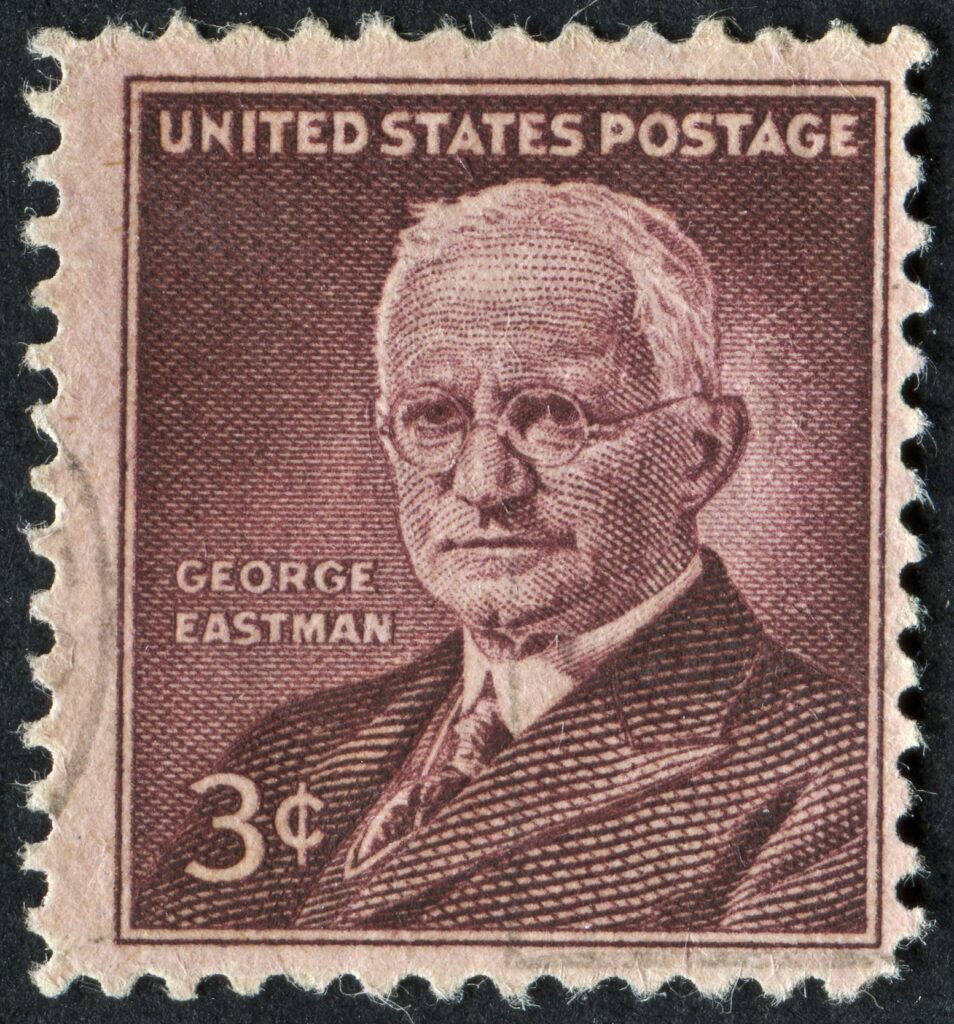
Kodak’s roots reach back to 1888, when George Eastman launched the slogan, “You press the button, we do the rest”. That simple promise defined the company: make photography easy, affordable, and ubiquitous. Through most of the 20th century, Kodak became a near-monopoly in consumer film and photographic paper, with strong positions in motion picture film, X‑ray imaging, and professional photography.
The magic lay not only in cameras, which were often sold at low margins, but in the “razor-and-blade” model of film, paper, and chemicals. Every roll shot meant more profit. Kodak’s scale, chemistry expertise, and distribution power created formidable barriers to entry.
By the 1970s, however, a new technology was quietly emerging. A Kodak engineer built the first digital camera prototype in 1975. It was bulky, crude, and slow—but it was also a harbinger. The world of silver halide film was about to meet the world of bits and pixels.



Challenge
Kodak’s central challenge was not technological blindness, if anything, it saw too clearly. The company knew that digital imaging threatened its lucrative film-based profit engine. Every pixel captured without film eroded the economic foundations of its business.
This created a deep strategic paradox. On one side, leadership had to defend a high-margin, global franchise that funded tens of thousands of jobs and generous dividends; on the other, it needed to incubate a new, lower-margin, more competitive digital business that undermined the old. The organization, incentives, and culture were all tuned to worship film: yields, coating efficiency, silver prices, and channel inventory.
As digital cameras and, later, camera phones improved quality and presence, consumers’ expectations shifted from preserving a few precious prints to capturing and sharing endless streams of images. Kodak’s physical, print-centric mindset struggled to adapt to an ecosystem increasingly defined by screens, software, and online platforms.



Analysis
Business Model Lock-In
Kodak’s financial structure depended on consumables, and digital disrupted that logic: the marginal cost of taking one more photo became effectively zero. The company attempted to graft digital products onto a film-centric P&L, rather than rebuild its economic engine around services, storage, and software.
Organizational and Cultural Factors
- Metrics and incentives: Managers were rewarded for film volumes, not digital adoption. Protecting the core looked rational quarter by quarter, but damaging over a decade.
- Identity and pride: Kodak saw itself as a chemical and materials science company. Digital required élite software, User Experience concept, and platform capabilities, areas where Kodak was neither dominant nor culturally comfortable.
- Decision speed: A large, hierarchical structure slowed response to rapidly evolving consumer electronics markets, where product cycles compressed dramatically.
Competitive Dynamics
- Electronics firms like Canon, Sony, and Nikon quickly mastered digital sensors, processors, and displays.
- PC and internet players, later joined by smartphone makers and social platforms—shifted value from hardware to ecosystems (e.g., Apple, Google, Facebook). Kodak rarely controlled the full stack.
Missed Platform Opportunities
Kodak experimented with photo-sharing sites, online albums, and home printing, but seldom committed at platform scale. It tried to monetize through inkjet printers and consumables, echoing its old model, while competitors like Shutterfly, Flickr, Facebook, and later Instagram captured the social and network effects around images.
Taken together, these forces turned Kodak from rule-maker to follower, reacting rather than redefining its industry.


What if still should be a living case?
If we treat Kodak’s journey as a living case study, what would a stronger strategy have looked like, and what analogs apply to today’s incumbents?
Deliberate Self-Disruption
Set an explicit internal target: “Cannibalize 100% of film profits with digital by year […]”
Create a separate, empowered digital imaging division with autonomy over pricing, channels, and partnerships.
Shift from Product to Platform and Services
- Position Kodak not as film and prints but as global memory company
- Invest in cloud storage and photo organization (searchable archives, AI tagging), sharing platforms and mobile apps.
-
-
- Subscription models for backup, editing, and creative tools.
-
Rewire Incentives and Culture:
- Tie senior compensation to digital usage metrics (active users, digital revenue share) instead of film volume.
- Recruit software, UX, and data leaders into top roles; integrate them into decision-making, not just engineering.
Modern-Day Lessons for Incumbents
Resilience requires the courage to undermine yesterday’s success in service of tomorrow’s relevance.
Disruptive tech must be treated as core, not adjunct. Don’t bolt on AI, cloud, or digital, just redesign the business model around them.
Short-term pain for long-term viability: margin compression and products’ cannibalization are often inevitable steps in surviving disruption.
Customer relationship end-to-end to be owned: control or strongly influence the platforms where customers interact, not just the hardware they buy.
Smaller, cross-functional teams with clear autonomy can act faster than legacy hierarchies in fast changes of scenarios.

Conclusions
At the heart of Kodak’s story is strategic inertia: a failure to reorient its business model, not a failure of invention.
Kodak’s arc is not a simple morality tale about arrogance or stupidity. It is a nuanced story of how rational decisions, made to protect a winning model, can accumulate into existential risk when technology shifts the ground beneath an industry. The company helped invent the very future that unseated it, yet could not fully reimagine its role in that future.
For today’s leaders, the lesson is stark: dominance in one paradigm is, at best, a temporary loan. The true competitive advantage lies in the willingness, and organizational ability, to reinvent the business before the market forces to.