





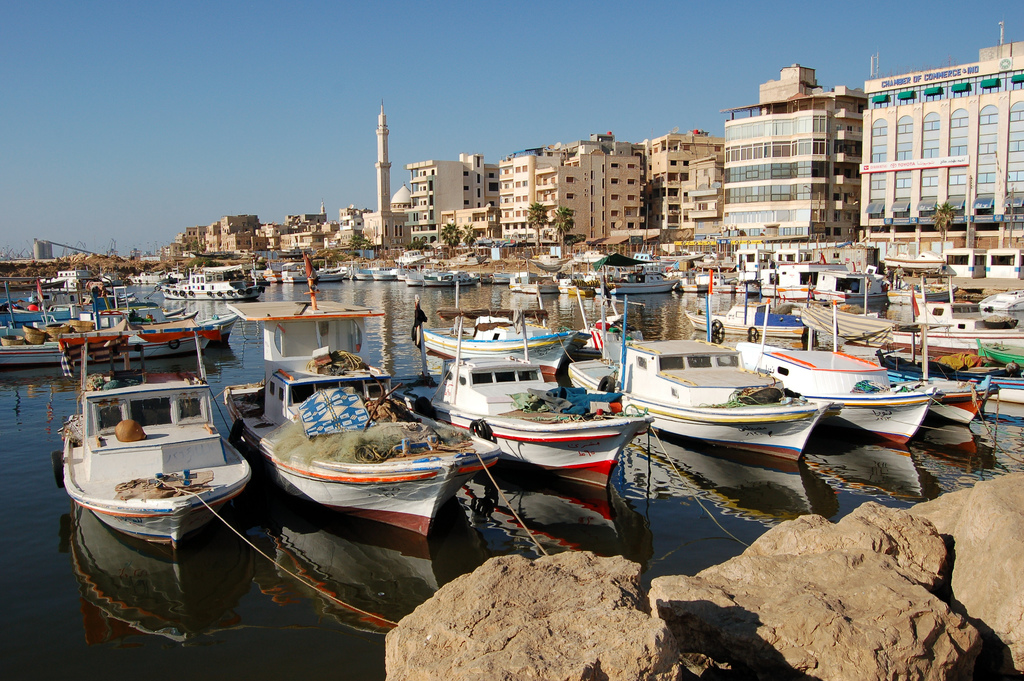
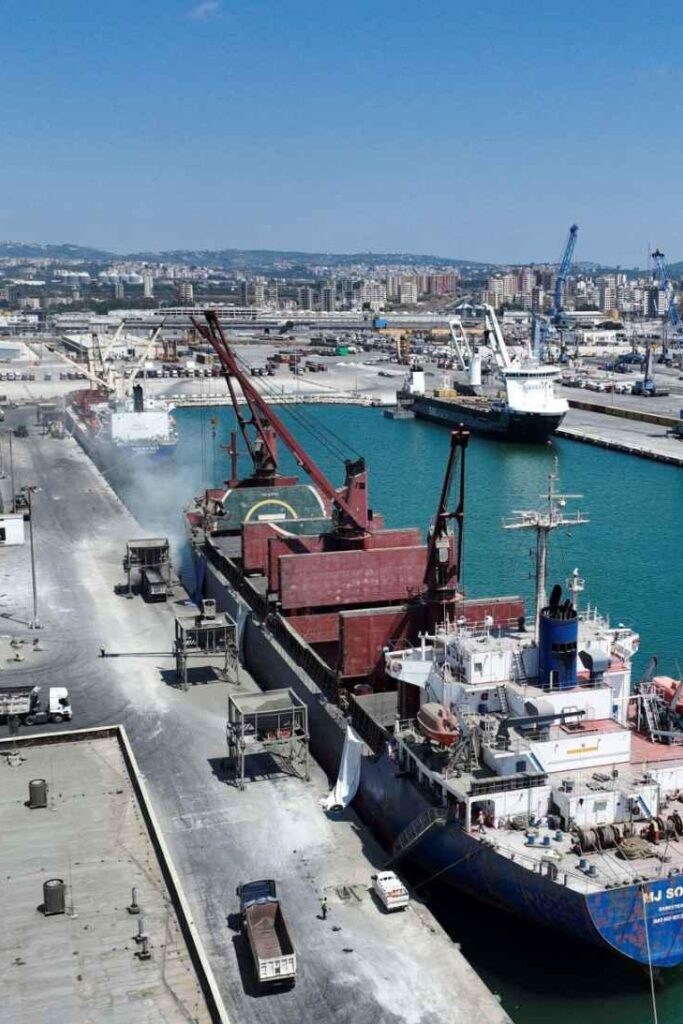
June was scorching the asphalt of Tartus like a griddle. Henri de La Rochefoucauld-Vaneau, a Parisian, descended from a noble military dynasty, a Middle Eastern art broker, stood in the shade of a rusted shipping container and watched four rough-hewn wooden crates, bound with steel straps, lined up on the quay like coffins at a funeral no one wanted to celebrate. Inside was the Lion, or what remained of it: four blocks of limestone, cut with the precision of someone who knows what a centimeter of stone is worth while, all around him, the world in flames is worth nothing at all.
The cargo ship, flying the Panamanian flag, its hull peeling, had not yet started its engines. The shipowner was waiting; in truth, everyone was waiting. Without the Lloyd’s policy, the cargo did not exist: it was merely a piece of contraband that any navy, from Port Said to Gibraltar, could seize by telegram. And Lloyd’s wanted one signature, just one: Khaled al-Asaad’s. Even smuggling had problems with incomplete paperwork.
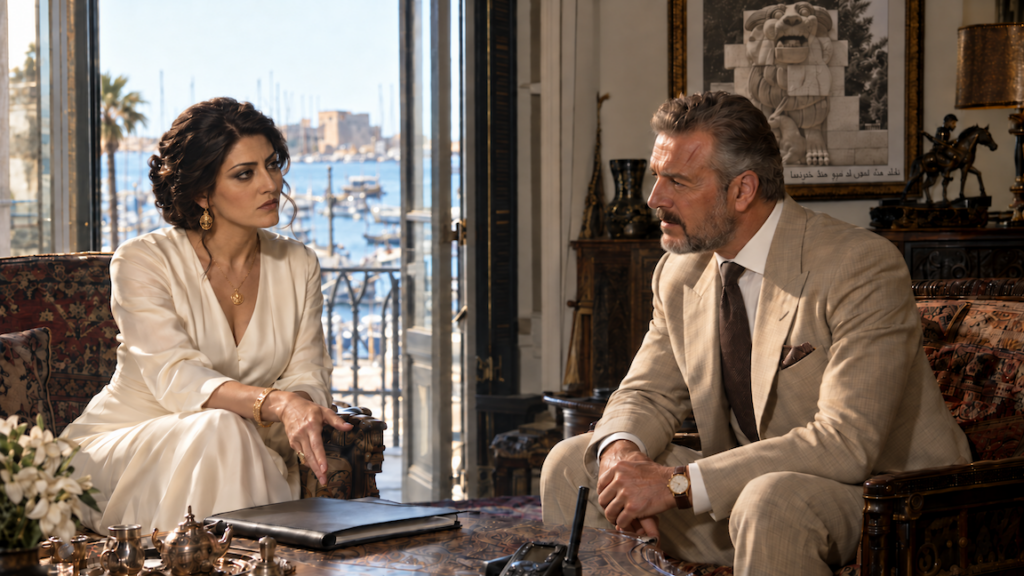
In Larnaca, three days earlier, Nadira al-Zabba had received Vaneau in a drawing room overlooking the harbour, among Anatolian rugs and a satellite phone on the coffee table that had never stopped ringing. «Chaos is an asset class, Mr Vaneau,» she had said, pouring the tea. «It grows if you feed it and yields returns if you let it mature: Syria must collapse beyond repair,» she said, without so much as a tremor in her voice. «Then someone will have to put it back on its feet, and that someone will have a Lion at the door.»
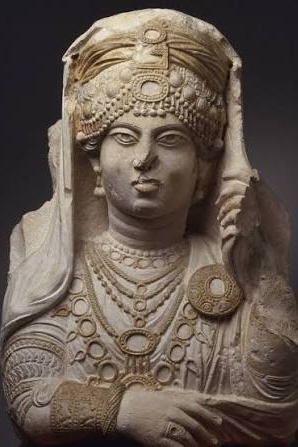
Nadira al-Zabba, wealthy heiress to a mercantile house, property investors, dealers in Roman-Palmyrene art. An exile on Cypriot soil since the days of the Franco-Syrian War. By her own account, the reincarnation of Queen Zenobia.
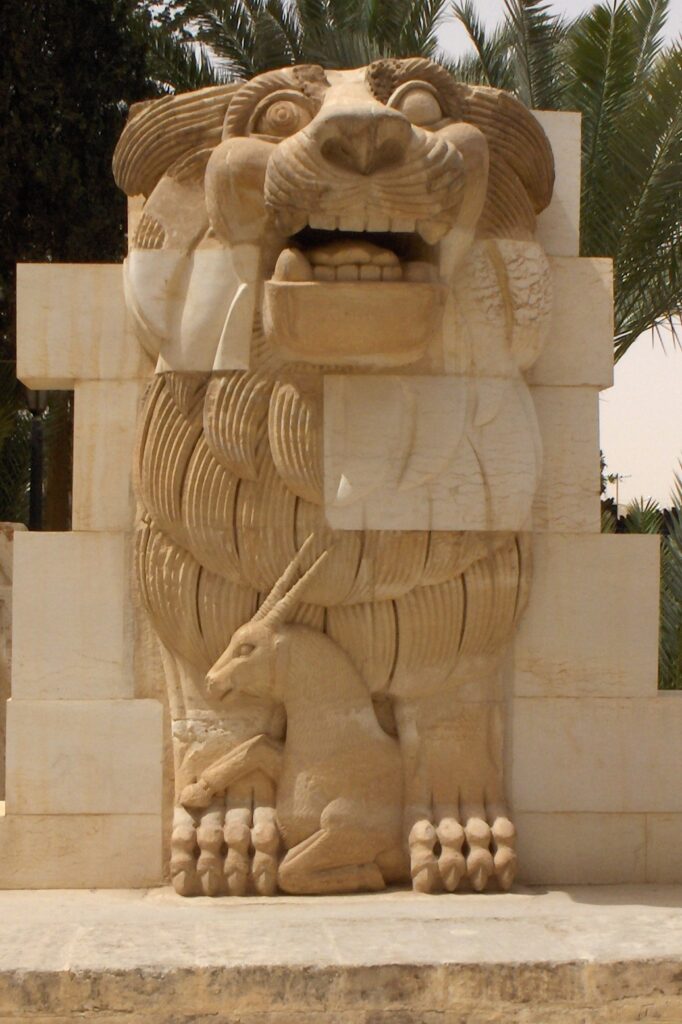
She set down the teapot. Behind Vaneau, framed, hung a black-and-white photograph: the crouching Lion, its paws resting on a gazelle, and on its left paw, in three regular rows, the inscription. Beneath the photograph, on the mount, the words:
ܐܠܠܬ ܬܒܪܟ ܠܡܢ ܕܠܐ ܢܫܘܕ ܕܡܐ ܒܡܩܕܫܐ
«It isn’t the script carved into the stone,» she explained. «It’s a rendering for those who cannot read Palmyrene Aramaic,» she said. «Three lines; my grandfather knew them by heart. Al-lat will bless whoever does not shed blood in the sanctuary. A single sentence, Mr Vaneau; no other inscription from antiquity is quite so concise. It has a beneficiary, a condition, and an obligation. The rest is commercial law with a few centuries of seniority.»
She traced the first letter with her fingernail, without touching it. «Those who shed no blood are protected. Those who shed it forfeit the guarantee. There is no penalty clause and no court of jurisdiction: Al-lat has no need of tribunals. For seventeen centuries, that covenant kept a city standing in the desert, which is more than can be said for any bank.» She looked up. «I will not break it, and I want no one else to be able to invoke it any longer and, after me, only those I pay.»
She presented herself as Zenobia’s reincarnation as naturally as other people declare their tax residence. Vaneau looked at the photograph, then at her. He signed the mandate: they had promised him seven zeroes. No one had asked whether he slept: sensitivity was not listed among the expenses.
Madina Isaeva smoked, leaning against the bonnet of a pickup. The cigarette trembled between her fingers in the heat rising from the metal. Her hair was badly tied back, and her shirt was stained with plaster dust and something darker that was not sweat. She spoke little, and when she did, she first counted the rounds left in her cartridge belt.
«The old man won’t sign,» she said. «They’ve already taken him; they’re holding him in the museum. They think he knows where the gold is.»
Vaneau did not answer at once. In his inside jacket pocket, folded in four, was his grandfather’s notebook. Cracked leather, faded ink, the handwriting of an officer who never lost the thread. A captain in the Bureau des Renseignements, stationed in Damascus from 1926. Among the pages, a note from 1931: attempted acquisition of the Al-lat relief for the Louvre. Blocked. Reason: the clause in the inscription. You do not transport a blessing. You transport a stone. The blessing stays where blood has not been shed.
«Then let’s go and get him,» said Vaneau.
Madina crushed the cigarette beneath her heel. «Do your friends in Larnaca pay even if he comes back in pieces?»
«They pay if he comes back with the paperwork. Without it, he’s just a souvenir.»
They left at dawn, along a track that was no longer a road. Madina said nothing for two hours; then, at an abandoned checkpoint, she braked abruptly. «Know about my last client?» she asked. «A museum in Grozny: they paid me in cash, in a bread bag. The museum no longer exists. The bag does.» She drove on. It was her way of saying that ethics was a luxury item on the inventory, and she had sold that too.
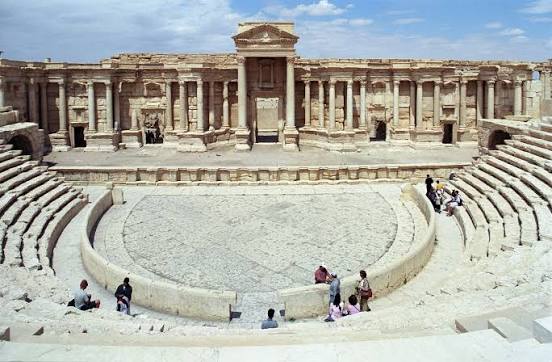
Palmyra, Bride of the Desert, greeted them with the silence of cities that have already decided to die. The columns still stood, white against the white sky, but around them were men with Kalashnikovs and black flags hanging from unlit streetlamps. Madina knew the right names, and Vaneau carried the right dollars, in thin bundles wrapped in waxed paper. No one asked who they were: in June 2015, questions were a luxury that came at a high price.
At the museum entrance, a boy with his face covered counted the dollars twice, then a third time, moving his lips. He could not read the inscription on the pediment, but he could read banknotes. «Ten minutes,» he said. Vaneau bought twenty.
Inside was a shattered shell: broken display cases, floors covered in splinters, the smell of burning mingled with the fear of those who had already seen what happened when you resisted. Khaled al-Asaad was in a room at the back, sitting on a metal chair, his hands bound in front of him with a cable tie. Eighty-two years old, unkempt beard, shirt torn at one shoulder, and the air of a man waiting for a delayed train, not death. His eyes were bright, alert, almost amused.
Vaneau sat down opposite him; Madina remained standing by the door.
«Mr al-Asaad,» Vaneau said in academic Arabic, the kind you learn from textbooks and lose in the field. «My name is Henri Vaneau, and I represent interests that would like to prevent the Lion from being reduced to dust. There is a ship in Tartus, safe conduct to Geneva, and a professorship in Paris, if you want it. I am asking for a signature: an expert statement of provenance, nothing more.»
Khaled looked at him for a long time. Then he smiled faintly, with his mouth, not his eyes.
«Your grandfather,» he said, «promised the same thing to a colleague of mine in ’38, then left him to the gallows. His name was Farid: I remember because he lent me a book on Zenobia and I never gave it back.»
Vaneau did not blink. He had read that story in the notebook, in a marginal note written in a more nervous hand. He had never told anyone about it.
«Times have changed,» he said.
«Times? Perhaps…« Khaled replied. «People certainly have: you are more polite, but the stone remains the same.»
Madina stepped away from the door. «We don’t have time for history lessons. Your jailers think you’re hiding the gold. If you don’t sign, they’ll find a way to make you talk. And it won’t be a pleasant conversation.»
Khaled slowly turned his head towards her. «There is no gold. There never was, or at least… not in that sense. There is limestone, sand, a line that Mr Vaneau’s grandfather measured incorrectly in 1934, because his stonecutters were afraid of venturing too far into the enclosure. The sanctuary’s footprint is not where he marked it. It is offset by three metres—three metres and forty centimetres, to be precise. I measured it myself in ’75, with a rope and a stake. No one believed me; no one measures anything any more. They take photographs.»
Vaneau felt something shift beneath his breastbone; his calculations were beginning to crack.
«If you sign,» he said, «the line doesn’t matter; the Lion leaves. The blessing stays here, if that’s what concerns you. Nadira al-Zabba doesn’t want blood in the sanctuary. She wants the Lion out; she wants the protection to lapse through absence. It’s more a matter of law than theology.»
Khaled laughed, genuinely this time, a short, dry laugh that made him cough.
«Nadira,» he said. «Zenobia reincarnated. I’ve read her statements: she speaks like someone who has already created the future, bringing it forward into the dying present. Tell her the blessing does not lapse through absence: it lapses only if blood touches the stone inside the enclosure. Outside, it’s only blood; inside, it’s a contract rescinded. And I will not sign the rescission.»
From the corridor came voices, footsteps. Someone shouted an order in a dialect Vaneau did not entirely understand. Madina stiffened.
«They’re coming,» she said. «If you don’t leave now, you never will.»
Vaneau stood and looked at Khaled. The old man had closed his eyes again, as though the conversation were over and he could go back to waiting for the train.
«The maps,» Vaneau said quietly. «My grandfather’s. If you tell me where the area is wrong, I can… I can make sure they don’t take you inside. I can point to another spot! I can lie!»
Khaled’s eyes widened. For an instant, Vaneau saw something that had to do with… geometry! Neither wisdom nor resignation, only geometry: cold, exact, merciless towards those who used it.
«Show me the map,» he said.
Madina pulled a folded sheet from her pocket, a yellowed photocopy of the 1934 surveys, bearing the captain’s pencil annotations. She spread it on the floor among the broken glass. Khaled bent down, his hands still bound, and studied the drawing as though looking at the face of an old friend he had protected all his life.
«Here,» he said, indicating a point with his chin; his fingers no longer quite obeyed him. «Move the footprint four metres west. Four metres. The sanctuary ends sooner than you think. The square where they told you to bring me is outside it. If they kill me there, the blood will not touch the stone. The blessing remains. Nadira will have her Lion, if you manage to take it away, but she will not have the end of the protection. She will have a piece of limestone and a war that does not belong to her.»
Vaneau stared at the point. Four metres. A tiny correction, almost invisible on a scale map. Enough to change the meaning of a murder.
«Why are you telling me this?» he asked.
«Because you are the grandson of a man who measured badly,» Khaled replied. «And because I am tired of watching people buy things they do not understand. Sign it yourself, if you like. I won’t.»
The footsteps were at the doorway now. Madina folded the map, slipped it into her pocket, and pushed Vaneau towards the rear window, the one overlooking the latrine courtyard, the only unguarded way out. Vaneau turned one last time. Khaled was sitting upright again, his hands in his lap. He was no longer looking at him.
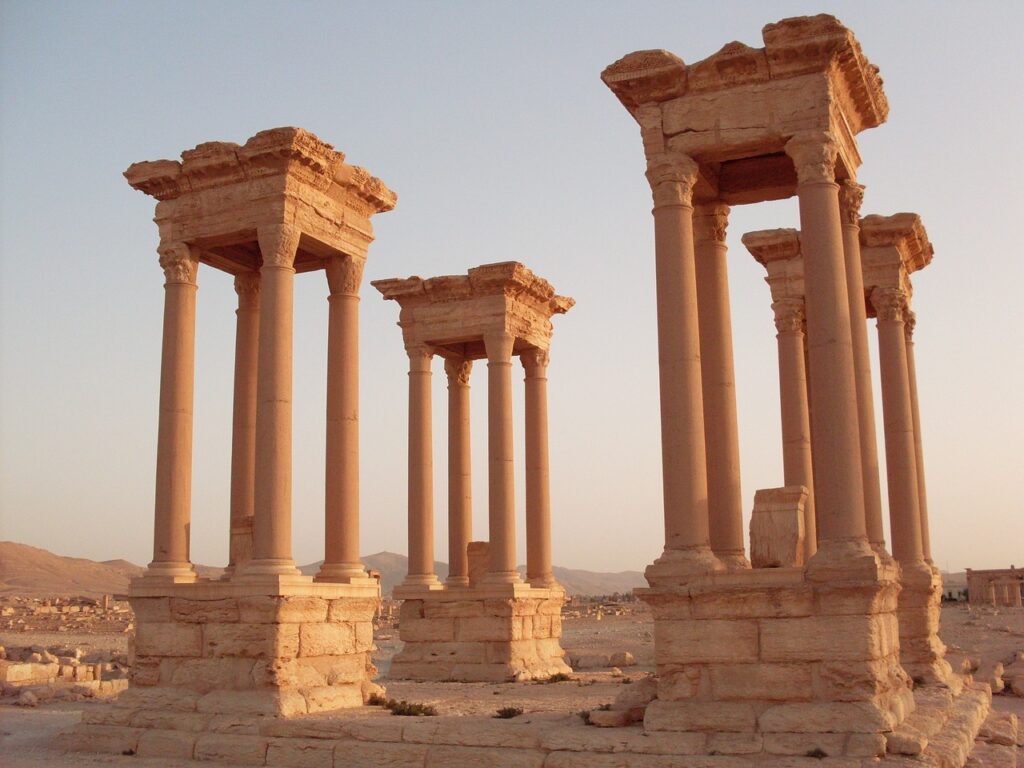
They crossed the courtyard and climbed into the pickup. Madina drove like someone who had calculated the margin of error and decided to run straight over it. Vaneau held the map on his knees and stared at it without seeing it. Four metres west. A lie told with the precision of a truth.
Back in Tartus that same evening, he called Nadira. She answered on the third ring: her voice calm, almost drowsy, as though the war were merely background noise.
«The old man won’t sign,» said Vaneau. «But I have the correction. The footprint is offset. If they execute him where they say they will, it’s outside. The sanctuary remains intact; the Lion can leave. As for the policy… the policy is another matter.»
Silence. Then Nadira laughed softly, without mirth.
«Then it’s no use to me,» she said. «If the blessing remains, the Lion is only a stone. And I don’t buy stones. I buy projects in the making. Tell Madina to leave the crates where they are, and tell the shipowner that the contract is void. Tell yourself, Mr Vaneau, that your grandfather was right: some things cannot be transported. You leave them to rot where they were born.»
She hung up.
Vaneau stood on the quay with the phone in his hand as the sun sank behind the containers and the Panamanian ship prepared to sail for whatever new destination offered a better return. Madina had already disappeared, while the crates were still there. Four dark rectangles against a sky turning violet. Inside, the Lion waited: no blessing, no curse. It waited for someone to decide whether it was worth opening, or whether it was better left to rot in the salt and rust, its inscription facing inward, where no one could read it.
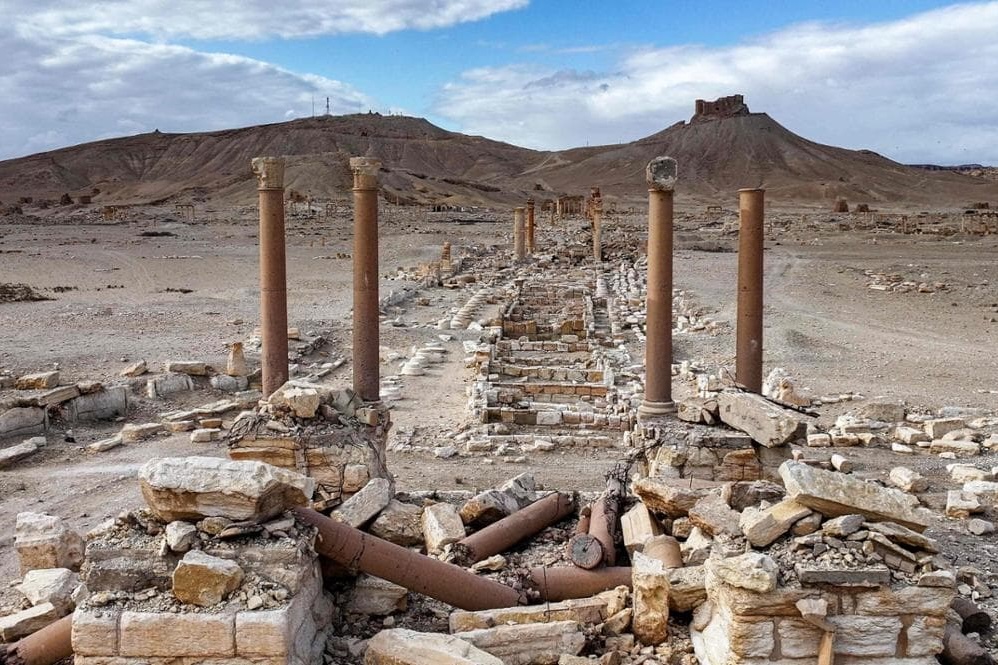
The next day, in Palmyra, Khaled al-Asaad was taken to the square. They beheaded him before a silent, disbelieving crowd. The blood fell on the dust, four metres east of the line Vaneau had corrected, outside the enclosure the old man had defended with a pencil and a lie. None of those watching understood that the blessing had stayed where it was. No one except a French broker who, on a quay in Tartus, stared at four closed crates and thought that his grandfather, after all, had measured badly his entire life, and that he had just done the same, more elegantly, but with the same result.
The ship sailed. Weeks later, the crates were opened by a Russian officer looking for weapons who found stone. He had them unloaded into a warehouse, covered them with a tarpaulin, and forgot about them. Nadira al-Zabba, in her villa by the sea, went on buying options on land she would never rebuild, because the war would not end and the protection, somewhere among the columns, continued to hold.
Madina Isaeva, meanwhile, had already collected an advance from another client, in Dubai: a fragment of architrave, a forged certificate, no questions. People like her never lose. All it takes is a change of currency.
Henri de La Rochefoucauld-Vaneau returned to Geneva with his grandfather’s notebook and a pencilled correction he would never show anyone. He kept it in his desk drawer, beneath the invoices. Some nights he took it out and used a ruler to measure the distance between what he had promised and what he had done. Once, the pencil lead snapped, and only then did he realize his hand was trembling.
It was four metres. Always four metres.